
Key takeaway: a good brief is not meant to design the home instead of the designer. It gives enough context for the first conversation to focus on useful solutions rather than guesswork about what matters most.
An interior project begins before the first visualisation. A brief connects household needs, function, scope, budget, inspiration and constraints. It does not need to be perfect or overly technical. It should be specific, readable and easy to update.
What an effective interior design brief should include
Start by describing who will use the space: household size, daily routines, working from home, pets, guests and particular needs. Then explain how the home should work: which rooms matter most, what does not work today and what needs better storage, light, acoustics or ergonomics.
Define the scope as well. Is the project for the whole home or selected rooms? Do you need a concept only, or technical drawings, 3D visualisations, procurement support or site supervision too? A clear scope makes proposals easier to compare on the same basis.
Budget and priorities
Give a credible range for the full investment. Separate the design fee, construction work, materials, furnishings and a contingency for unforeseen decisions. You do not need a number accurate to the last currency unit. A designer needs to understand the boundaries and where you do not want to compromise.
A simple order helps: must have, nice to have and elements that can be reduced if the budget or floor area becomes demanding. Read our apartment renovation budget guide for a fuller cost-planning framework.
Inspiration needs a comment
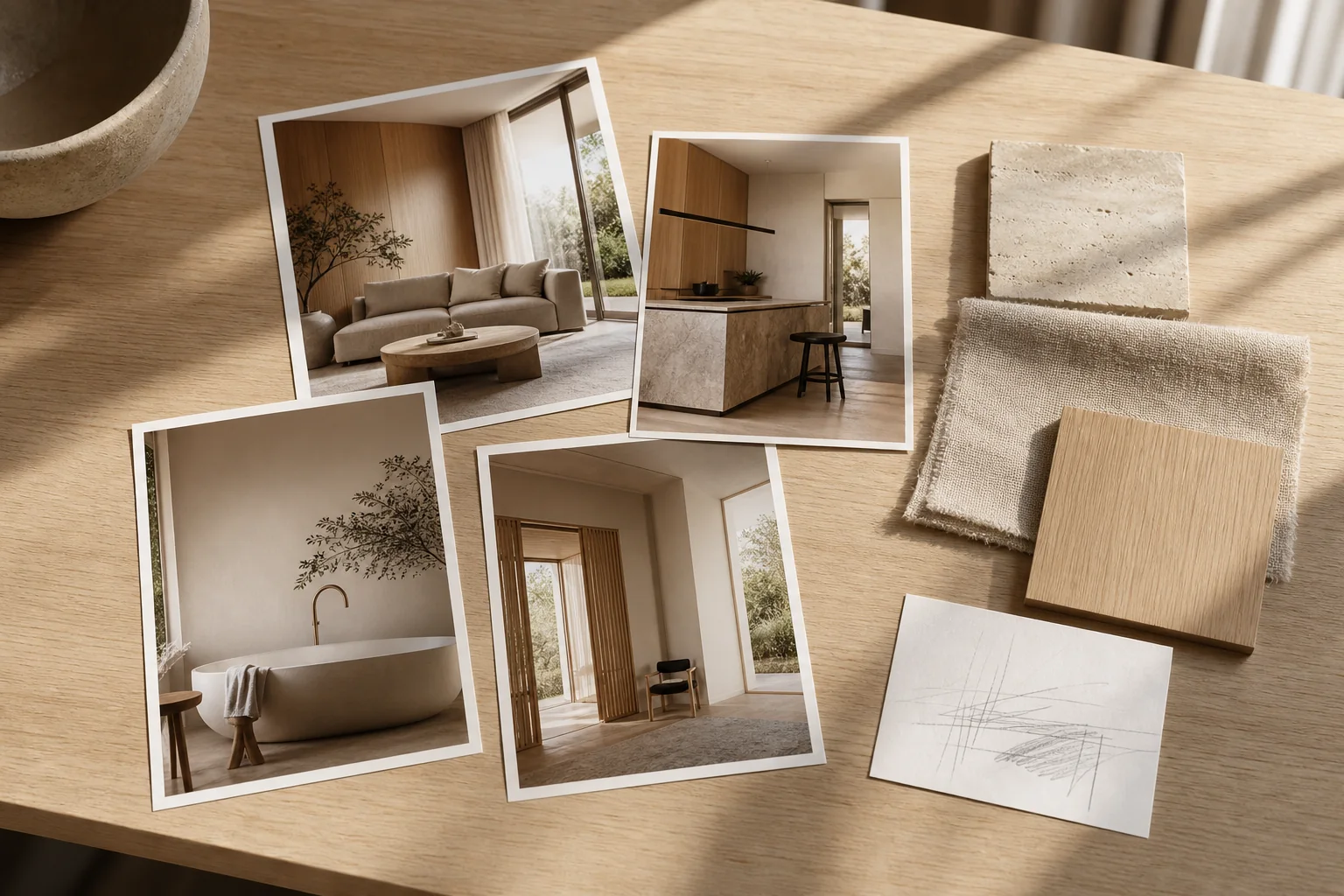
Sending many Pinterest images alone rarely provides a complete picture. Two interiors may appeal for very different reasons: light, proportion, material, layout or atmosphere. Add one sentence to every important image: what exactly you want to keep from it and what you do not.
For example: I like the warm indirect light, but not the dark walls; I want similarly simple joinery, but in a lighter timber; I like the calm mood, but I need more storage. If you do not know the name of your style, start with AI Project Compass and use the result to organise shared visual signals.
Constraints are part of a good project
Do not hide things that may affect the solution: dimensions, services, structural walls, ventilation, handover dates, building rules or elements that must remain. Describe the problem instead of imposing a solution yourself. This gives the designer a real context in which to assess the options.
What not to put in the brief
- Do not try to solve every design question on the designer’s behalf.
- Do not mix conflicting references without explaining which one is more important.
- Do not hide budget boundaries or technical constraints.
- Do not turn the brief into a thirty-page document that nobody updates.
How a brief helps you choose the right designer
A portfolio shows the look of past projects, but not the full fit with your situation. With a clear brief, you can compare designers by experience with a similar scope, approach to budget, communication style and ability to work with constraints. Start with profiles in the Designer Directory, then move to a specific conversation with selected people or studios.
A brief will evolve as the project develops. Each significant change should still be assessed for its effect on scope, budget and timing. If you are planning the wider project, also read how to plan an interior design project and an interior design project timeline.
Conclusion: a good brief does not restrict creativity. It removes ambiguity, reveals priorities and gives both sides an honest starting point for better decisions.
| Area | What to include |
|---|---|
| Project | Property type, location, floor area, scope and target date. |
| Users | Household members, routines, work, hobbies, pets and guests. |
| Functions | What rooms must support and which problems the project should solve. |
| Style | Annotated references, materials, palette, atmosphere and clear dislikes. |
| Budget | Range, priorities, contingency, premium items and possible savings. |
| Constraints | Existing condition, services, structure, timing and items to retain. |
| Collaboration | Service scope, communication preferences and decision-makers. |
Should the brief be ready before contacting a designer?
It does not need to be perfect, but it should cover the main needs, budget, scope and references. This makes the first conversation much more productive.
How long should an interior design brief be?
In most cases, two to five clear pages or screens plus annotated references are enough. Quality of information matters more than length.
Can the brief change during the project?
Yes. A brief should be a living document, but major changes should be assessed for their effect on budget, schedule and scope.
Does a brief replace a site survey?
No. A brief describes needs and expectations. A site survey provides precise technical data about the space.
Do I need to know the name of my interior style?
No. Specific references with a short explanation are more useful than a randomly chosen style label.
What if household members want different things?
Record the expectations separately, then agree shared priorities and the areas where compromise is needed.
Can I include a floor plan and photos of the current condition?
Yes. They are helpful when they show dimensions, layout, key constraints or elements you want to keep. They do not replace a professional survey.
When is it useful to send a brief to several designers?
When you want to compare approaches to the same clearly described project. Send it only to people or studios whose experience and way of working broadly fit your needs.