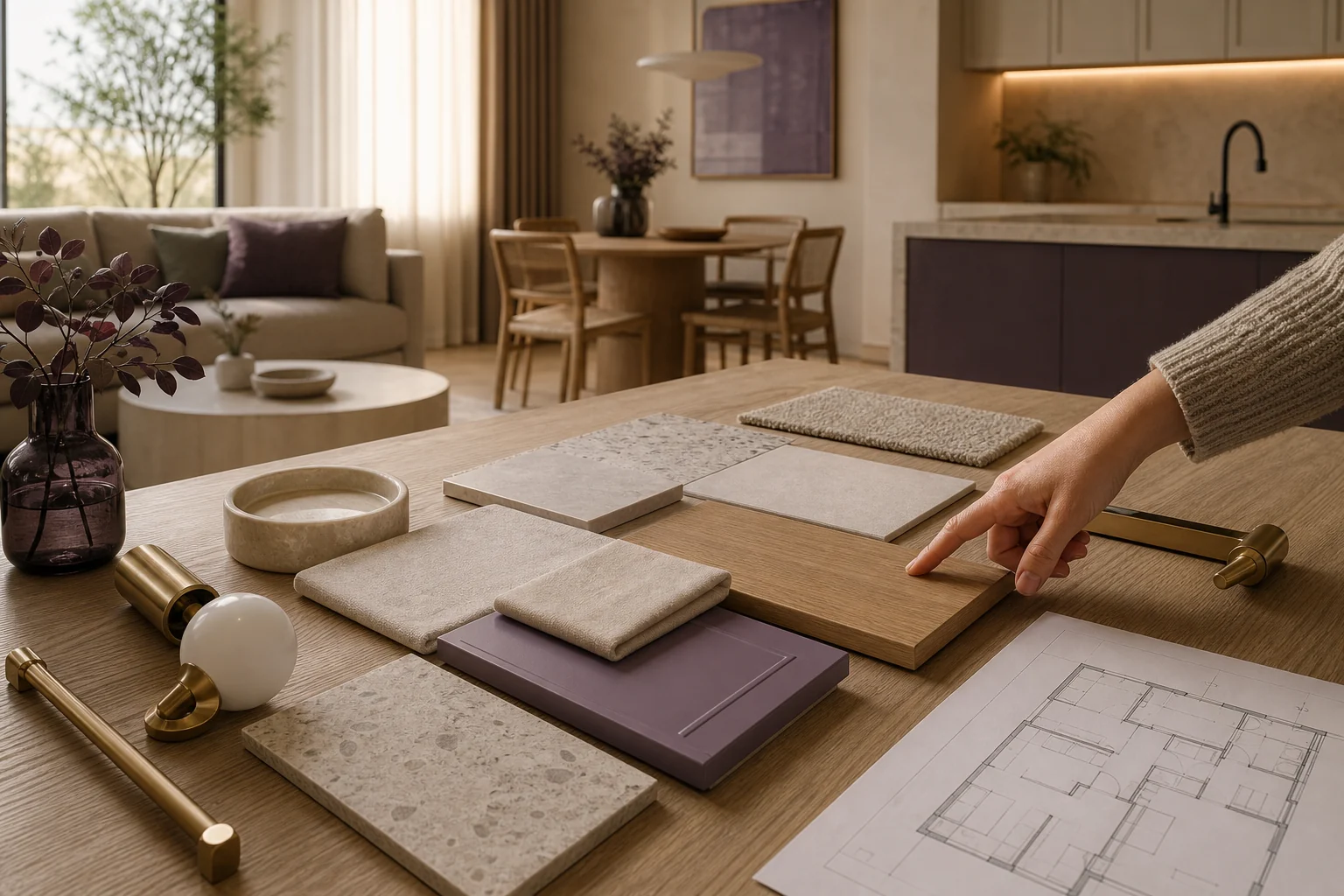
Key takeaway: saving money on a renovation does not mean buying the cheapest products. The greatest losses happen when good decisions are made after work has started, when every change affects time, labour and further purchases.
First decide what matters for safety, durability and daily comfort. Only then look for options with a better value-to-cost ratio. Start with a category-based renovation budget.
Save on chaos, not on the foundations
A complete brief, tested layout and agreed work sequence reduce the number of changes during renovation. That often matters more than the difference in price between one lamp or tile. In the brief, record non-negotiables, the investment limit and the elements that could have a more economical equivalent.
Before ordering, check whether a decision already depends on services, dimensions, joinery, delivery timing or the contractor. The earlier you see the dependency, the easier it is to find an alternative without paying for rework.
Choose durability where use is intense
For electrical and plumbing work, safety-related solutions, waterproofing, floor preparation and key joinery mechanisms, the cheapest option can carry the greatest risk. That does not mean every choice must be premium. It means understanding function, warranty, installation conditions and service availability.
There is usually more room to adjust the budget on elements that are easy to replace or not tied to hidden work: some decorative pieces, accessories, certain loose furniture items or colour accents.
Compare alternatives with the same function
Do not compare two products randomly because they look similar. Ask: what job must this element do, how long should it last, what does installation include and what would replacement cost? Then you can look for an alternative that retains the critical function while simplifying material, dimensions or detail.
Standard dimensions, fewer unusual details and a considered number of materials often reduce cost without weakening the character of the home. A designer can show where a simpler construction does not change the finished result.
Plan procurement and deliveries
Last-minute purchasing reduces choice and increases the chance of expedited delivery, storage fees or improvisation on site. With an interior project timeline, you can flag long-lead items and decide before they become urgent.
Also check the full cost: quantity with allowance, delivery, carrying, installation, accessories and return conditions. The lowest search result is rarely the whole picture.
What to negotiate, and what not to hide
Compare contractor proposals by scope, timing and responsibility. Agree who buys materials, who is responsible for measurement and what happens when a change appears. Do not hide the budget from the designer: a clear limit lets them propose options before decisions become expensive.
If you need help deciding priorities, use AI Project Compass. A structured brief gives a designer the chance to find savings where they do not reduce the quality of life in the finished home.
| Area | Approach to saving | Why |
|---|---|---|
| Planning and decisions | Settle the critical scope before works. | It reduces the cost of changes and delays. |
| Decorative finishes | Compare alternatives with a similar effect. | They are easier to change without disturbing services. |
| Unusual solutions | Use them deliberately and selectively. | Standard dimensions usually simplify production and installation. |
| Services and safety | Do not choose only by the lowest price. | Mistakes are hidden, difficult and expensive to repair. |
| Procurement | Decide early and calculate the full cost. | Availability, delivery and installation often change the outcome. |
Where is it safest to save?
On elements that are easy to replace and alternatives with the same function: some decoration, simpler details or certain loose furniture pieces.
Where should I avoid cutting costs?
On safety, services, waterproofing, substrate preparation and elements that are difficult to repair after work is complete.
Can an interior designer help save money?
Yes, when the scope includes budget work. A designer can reduce late changes, select alternatives and organise the order of purchases.
Are standard dimensions cheaper?
They often simplify production, availability and installation, but always check that they do not weaken the room’s ergonomics or function.
Should I buy everything during a sale?
Not if the decision is not yet confirmed. A sale does not compensate for return, storage or adaptation costs of the wrong product.
How do I avoid expensive changes?
Settle layout, services, joinery dimensions and key materials before work begins, and assess every change against the whole timeline.
Does a cheaper contractor always mean more risk?
Not always, but compare proposals by scope, experience, timing and responsibility. A rate alone does not show what the service actually includes.
How does ArchiCompass support value decisions?
It helps you set priorities, scope and budget before speaking with a designer, so savings can be found consciously rather than by accident.