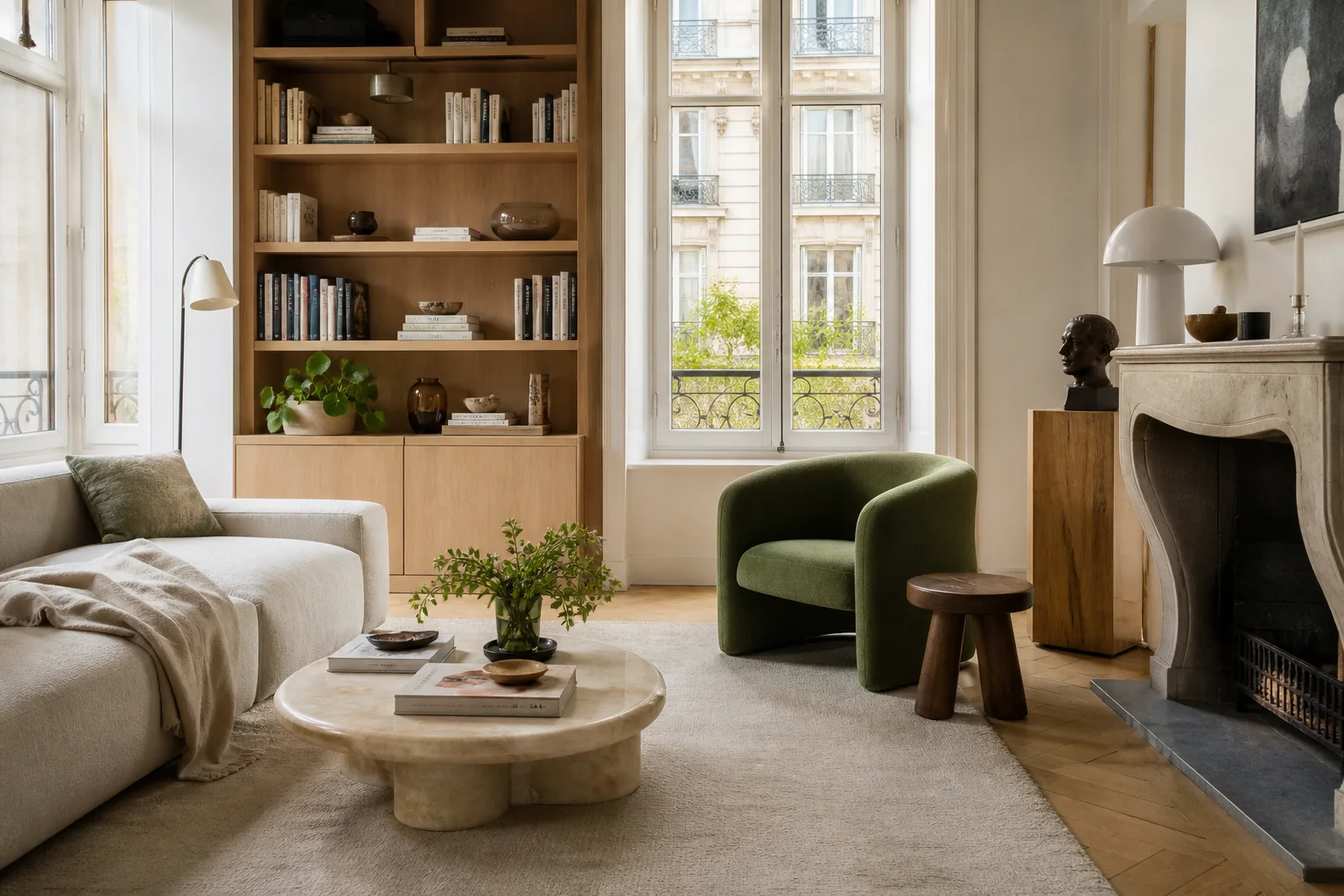
Key takeaway: you do not need one label to describe an entire home. It is more useful to recognise a few shared principles: the light you need, your relationship with contrast, materials that feel right and the amount of visual quiet that makes you comfortable.
Style names are useful shorthand in a conversation with a designer, but they do not replace examples. Save images that appeal to you for similar reasons, then analyse them in AI Project Compass. The result is a starting point, not a verdict.
Japandi and warm minimalism
This direction is built on a calm composition, pale wood, texture, a limited palette and objects that have a place. It suits people who want visual breathing room without sterility. It does require deliberate storage, because excess quickly disrupts the rhythm.
Scandinavian style
Light, practicality and simplicity matter more here than decoration. It can work especially well in apartments that need more brightness and easy everyday solutions. Add your own colours or meaningful objects to avoid a catalogue-like result.
Contemporary and soft modernism
A contemporary interior usually combines clear architecture, good proportion and calm materials. Soft modernism softens that base with rounded lines, gentle light and a more sensuous palette. It is a useful starting point when you want a flexible project that does not feel cold.
Contemporary classic
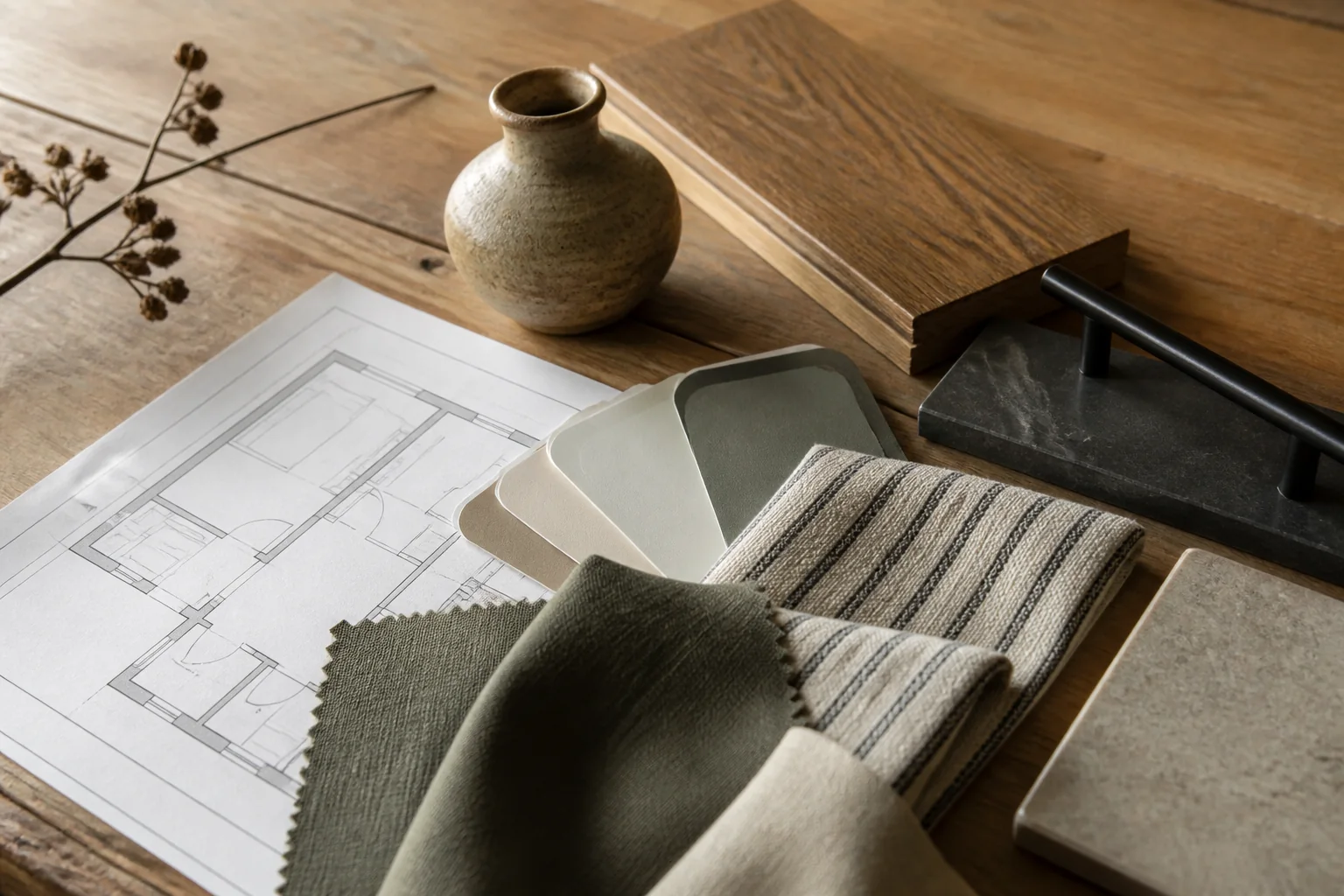
This direction combines symmetry, more refined finishes and quietly elegant details with current functionality. It can be a strong choice for a period apartment or a home intended to remain relevant for years. It works best when detail is restrained rather than copied without context.
Industrial and more expressive character
Brick, metal, deeper tones and exposed construction make sense when they fit the architecture and how you live. Instead of reproducing an entire style, use one strong motif: a lamp, steel detail, deep colour or raw texture.
How to choose when you like different styles
Choose one base direction and two accents. For example, the layout and materials may be contemporary, the lighting soft like Japandi, and one chair or artwork more classic. How to Define Your Interior Style gives you a process for organising that mix.
Once the brief is ready, compare profiles in the Designer Directory. Look not only for the same aesthetic, but also for experience with a similar scale, property type and scope.
| Direction | Core signals | Good fit for |
|---|---|---|
| Japandi | Wood, texture, calm and a limited palette. | People seeking order and warmth. |
| Scandinavian | Light, function, simplicity and comfort. | Apartments that need lightness. |
| Soft modernism | Soft lines, stone, depth and gentle light. | Those who want modernity without coldness. |
| Contemporary classic | Proportion, detail and refined finishes. | Homes with architectural character. |
Can interior styles be combined?
Yes, if one direction remains the base and the others are deliberate accents. Proportion, palette or material should provide a common language.
Which style is best for a small apartment?
There is no single best style. In a small space, light, storage, furniture scale and a coherent number of materials matter more.
Does a designer have to specialise in one style?
No. A good designer can work across aesthetics if they understand your needs and translate them into a coherent project.
How can I identify my style if I do not know the names?
Collect images and describe repeating materials, colours, lighting and atmosphere. The name may come only at the end.
Does style affect budget?
It can, particularly when it calls for custom materials, joinery or detailing. Final cost still depends on scope and specific selections.
Can AI choose my style for me?
AI can help reveal patterns in your inspiration. The final direction should come from a conversation about function, budget and the real home.