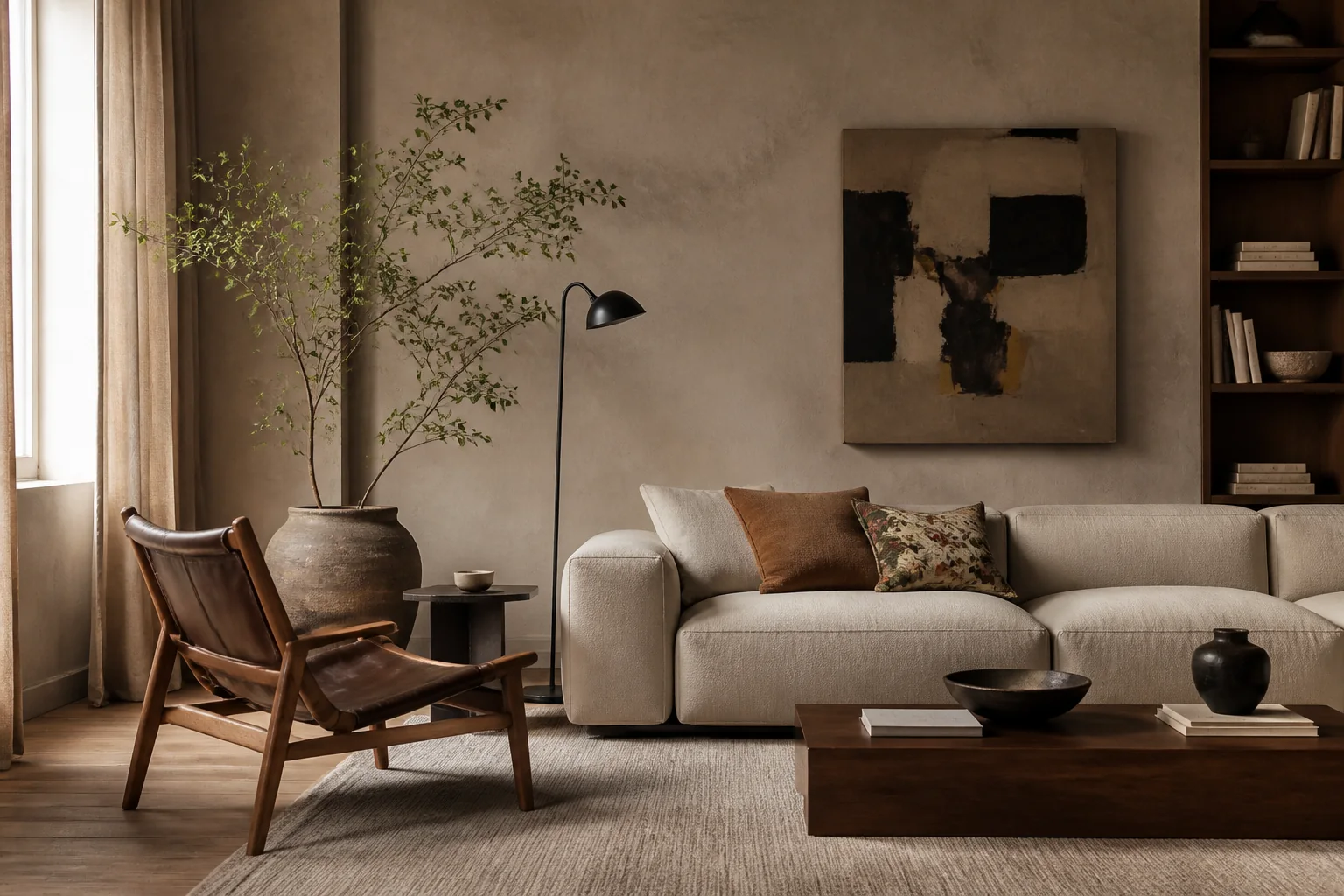
Key takeaway: a trend is useful when it helps you name what you genuinely like, not when it replaces your own judgment. In 2026, notice more material, calm and personal interiors: spaces with colour depth, texture, light and elements that do not look as though they were bought in one day.
Before saving more inspiration, decide what must remain stable: the layout, household needs, budget and how the home will be used. Then use AI Project Compass to see which signals genuinely repeat across your images.
1. Material matters more than a special effect
Natural wood, stone, ceramic, linen, wool and visible weaves create an interior that feels considered in more than one dimension. The goal is not to use everything at once. It is usually stronger to combine two or three honest materials and let them be seen.
2. Warmth does not have to mean beige
A calm base can include clay, muted green, burgundy, cocoa or brown. Before choosing a colour for a large surface, view a sample in morning light, afternoon light and artificial light. Colour should work with the direction of light and the existing floor, not only look good on a screen.
3. Softer geometry and real comfort
Rounded forms, more relaxed sofas and furniture with a legible construction can soften technical spaces. Choose them alongside dimensions and circulation routes. A striking chair does not help if it blocks a passage or leaves nowhere to put down a cup.
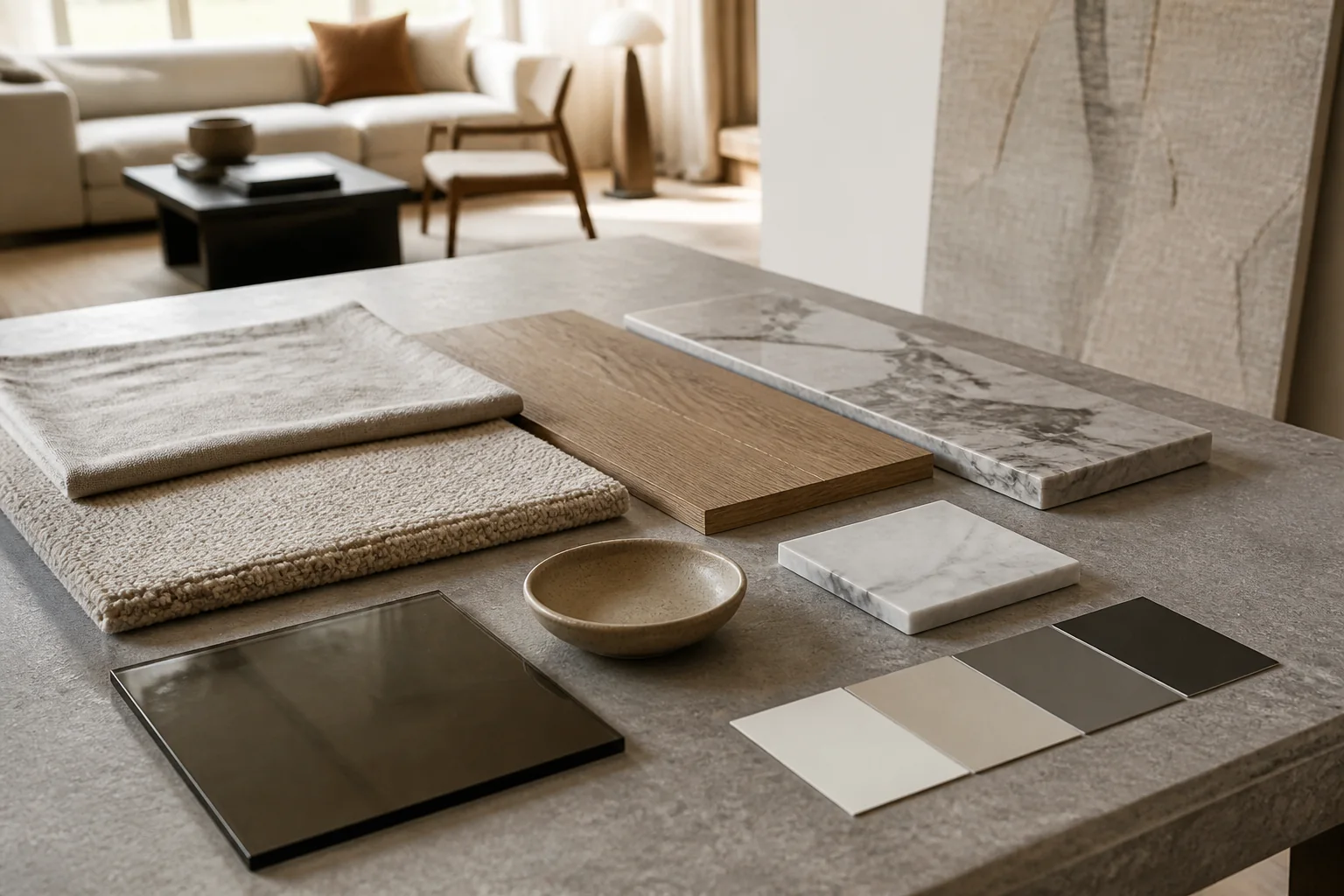
4. Objects with a story and a personal point of view
One restored chair, a vintage-market lamp, ceramic made by a local studio or art found outside a familiar retailer can do more than five random accessories. Leave room in the project for elements that will arrive over time.
5. Design light in layers
One fixture in the middle of the ceiling is rarely enough. Plan general, task and mood lighting; then decide what should be highlighted and what can remain quiet. It is often a simpler route to quality than replacing every piece of furniture.
How to turn inspiration into a real project
Sort saved images into three groups: elements you like visually; solutions that are functional; and things that only photograph well. Then describe your floor area, scope and budget in an interior design brief. If you cannot name your style yet, start with how to define your interior style.
Trends should help you make better decisions, not force change. The right direction is one that still belongs in your home after it leaves the front pages of magazines.
| Direction | How to use it | What to check |
|---|---|---|
| Texture | Add wood, textile or stone where it will be touched. | Durability and maintenance. |
| Colour | Introduce it through a smaller wall, textile or joinery. | Daylight and neighbouring materials. |
| Soft forms | Choose one comfortable rounded volume. | Circulation and room proportion. |
| Vintage element | Look for one object with character. | Condition, dimensions and restoration potential. |
Do I need to design my home around 2026 trends?
No. Trends are a reference point, not a list of obligations. Start with decisions that suit your life and budget.
How do I choose a trend that will not date quickly?
Use it in details, material or lighting, while keeping the lasting base in a good layout and durable neutral elements.
Can dark colours work in a small apartment?
Yes, when they are considered alongside light, scale and function. Test a sample in the actual room first.
How does AI Project Compass help with inspiration?
It helps identify repeating visual signals and organise them into a starting point for a brief. It does not replace a designer’s decisions or technical assessment.
Is vintage furniture worth buying?
It can be a strong choice if condition, dimensions and any restoration cost fit the project.
Where should I start when planning a trend-led interior?
Start with function, layout and a few strong references. Choose palette, materials and accessories afterwards.