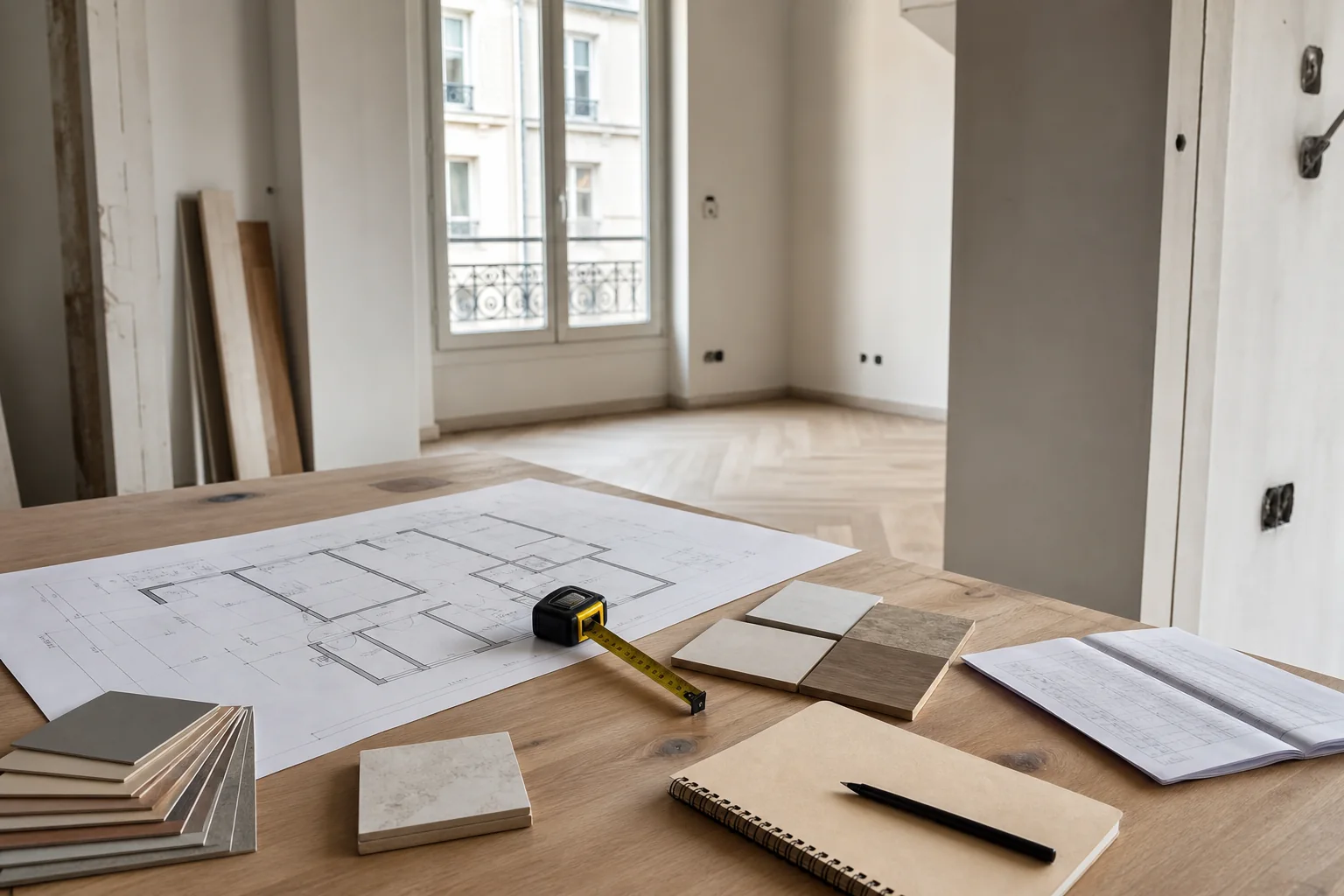
Key takeaway: renovations rarely become difficult because of one dramatic mistake. They usually start to unravel when several small decisions are made too late: the budget is incomplete, inspiration is inconsistent, measurements are missing or a contractor is booked before the scope is clear. Most of these problems can be avoided before the first day on site.
1. Starting without a clear project objective
We want it to feel modern is not a complete project objective. Write down how the home should work: who uses it, where they work, what needs storage, which rooms matter most and what the current layout does not provide. Function should come before style.
2. One budget number with no reserve or categories
A general amount is not enough. Plan design fees, construction, services, materials, joinery, lighting, furnishings and logistics separately. Keep a dedicated contingency for the unexpected. It makes it easier to decide where a saving makes sense and where a compromise will be costly in everyday use.
3. Collecting inspiration without editing it
Pinterest and Instagram can help define direction, but a random collection often combines conflicting styles, budgets and proportions. For every important image, note what you genuinely like: colour, lighting, material, layout or atmosphere. Inspiration should provide information, not only mood.
4. Making decisions without measurements or technical constraints
A convincing concept can still fail if it ignores services, risers, ceiling height, structure, ventilation or real dimensions. An early survey and a review of constraints reduce the risk of redesign after materials have been ordered.

5. Hiring contractors before defining the scope
Contractors can price work reliably only when the scope is clear. Without a brief, drawings and a decision list, quotations are difficult to compare and additional costs emerge during construction. Define the scope first, then request prices and prepare the timeline.
6. Choosing a designer only by portfolio style
A portfolio shows the outcome, not the full process. Check experience with a similar scale and budget, communication style, service scope, number of revision rounds and support during delivery. Good fit is about the way of working as much as it is about aesthetics. Our guide on how to choose an interior designer can help.
7. Having no decision-making rules
When several people are involved, conflicting feedback can stop the work. Agree who approves decisions, which elements are priorities and how quickly replies are needed. One current source of information prevents mistakes and misunderstandings.
A short pre-renovation checklist
- A description of household needs, problems and priorities.
- The scope of rooms, services and responsibilities.
- A budget split into categories with a clear contingency.
- Measurements, existing conditions and known technical constraints.
- Selected inspiration with an explanation of what matters in it.
- A decision-maker and a communication process.
- An initial sequence for decisions, orders and works.
A practical starting point is an interior design brief, which organises these details. Then compare the sequence in an interior project timeline, prepare an apartment renovation budget and use the complete pre-renovation checklist.
Conclusion: a successful renovation does not begin with buying tiles. It begins with a shared understanding of the project. The earlier you structure needs, budget, inspiration and constraints, the fewer decisions will be made under pressure.
| Area | What to prepare |
|---|---|
| Needs | Household functions, problems and priorities. |
| Budget | A category breakdown and separate contingency. |
| Inspiration | Selected references with a short explanation. |
| Technical | Measurements, services and known constraints. |
| Scope | Work, materials and responsibilities. |
| Decisions | Approver and communication process. |
Where should renovation planning begin?
Start by defining needs, rooms in scope, budget and the most important technical constraints.
How much contingency should I include?
The contingency should reflect the scale and risk of the project. The important thing is to keep it separate from items planned from the start.
Are Pinterest images enough for a designer?
No. Explain what you like in each image and connect the references with function, budget and constraints.
When should I choose a contractor?
After preparing a reasonably clear scope of work. That makes quotations easier to compare.
Do I need a designer for a small renovation?
Not always, but a consultation can prevent costly mistakes in layout, services, lighting and material selection.
Can I buy materials before the design is ready?
It is usually better to delay major purchases until layout, dimensions, services and quantities are confirmed. Samples and early price research are a safer start.
How can I avoid changes during a renovation?
Not every change can be eliminated, but a clear scope, measurements, a decision plan and one place for approving choices reduce them significantly.
What should I do if the budget turns out to be too small?
Return to the priorities. Reduce the scope or phase lower-priority elements rather than cutting the quality of work and technical decisions that will be difficult to correct later.